

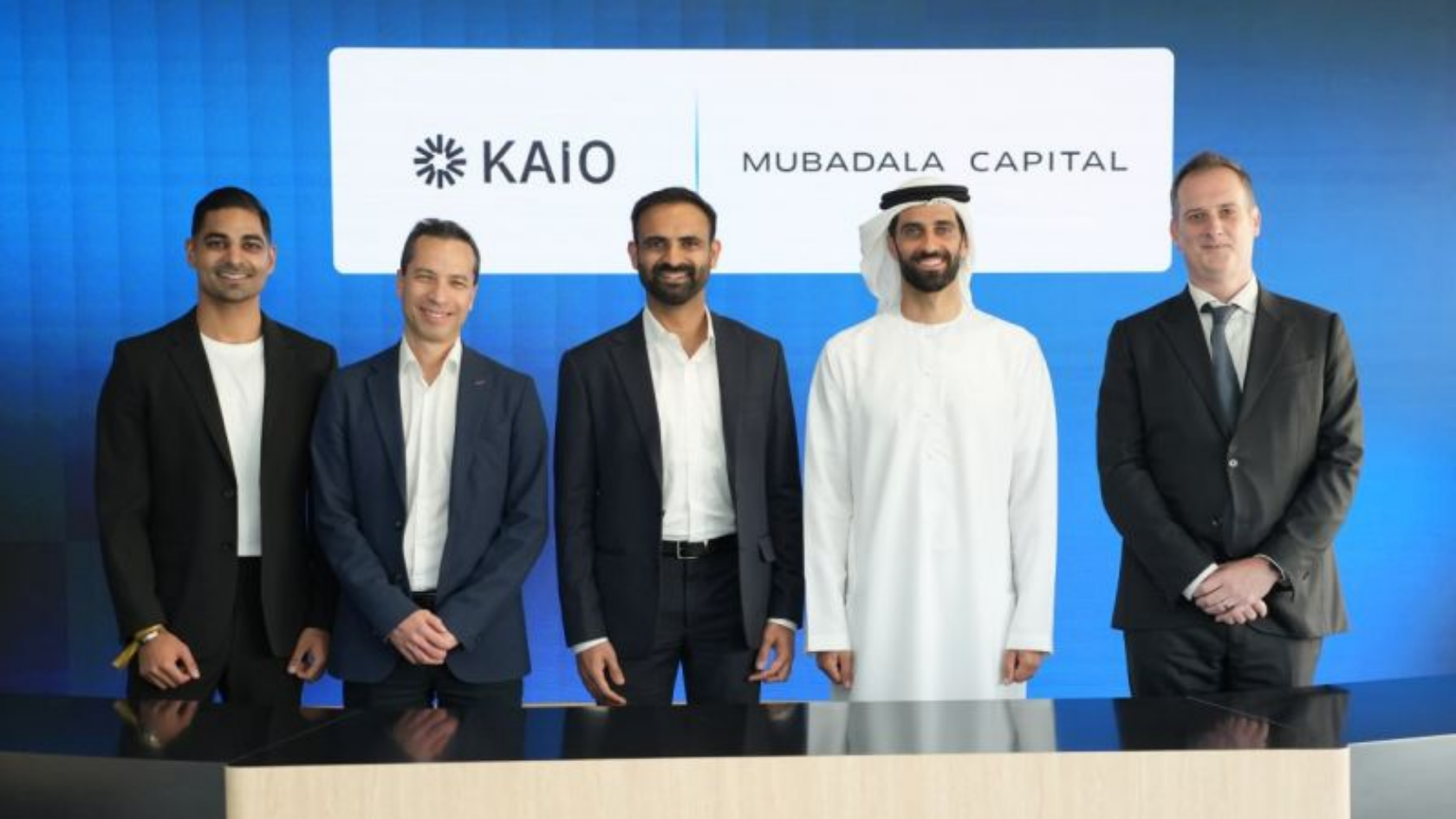
KAIO and Mubadala Capital have launched tokenised access to one of Mubadala Capital’s evergreen private markets strategies, live on three blockchains at once: Base, Solana and Sui. Coinbase is both an investor in the product and has added it to its own corporate balance sheet.
What’s the deal
| Field | Detail |
|---|---|
| What launched | Tokenized access to Mubadala Capital’s evergreen private markets strategy |
| Partners | KAIO (ADGM-based tokenisation infrastructure) and Mubadala Capital |
| Blockchains | Coinbase, Solana and Sui |
| Onchain assets raised | More than $75 million at launch, and growing since, per KAIO’s CEO |
| KAIO’s total platform TVL | Approximately $150 million across 10-plus blockchains |
| Mubadala Capital AUM | More than $600 billion overall; more than $60 billion in core alternatives |
| Coinbase’s role | Investor, and added the strategy to its own corporate balance sheet |
| Investor eligibility | Qualified institutional and accredited investors only |
| Announced | July 23, 2026, from Abu Dhabi and London |
What KAIO and Mubadala Capital actually launched
The product gives qualified institutional and accredited investors tokenised access to one of Mubadala Capital’s evergreen private markets strategies, the kind of deal flow and co-investment access that has traditionally required a relationship with a large private bank. KAIO, an Abu Dhabi Global Market-based tokenisation platform, built the infrastructure. Mubadala Capital joins existing KAIO partners BlackRock, Brevan Howard, Hamilton Lane and Laser Digital, and KAIO’s platform now carries roughly $150 million in tokenised assets across more than 10 blockchains.
Coinbase’s role has two parts: it invested directly in the tokenised product, and separately added it to its own corporate balance sheet, using it for institutional treasury purposes rather than holding it as a passive position.
Why three blockchains
Neither KAIO nor Mubadala Capital gave an explicit reason for choosing Base, Solana and Sui specifically over other chains. Instead, each ecosystem weighed in separately. Nick Ducoff, Head of Institutional Growth at the Solana Foundation, said: “Tokenised capital markets require infrastructure that can operate with the speed, scale and reliability global financial products demand.” Adeniyi Abiodun, co-founder and chief product officer at Mysten Labs, the company behind Sui, said Mubadala Capital’s decision to tokenise on Sui “is a strong signal for how the GCC region is embracing onchain finance.”
In their words
Max Franzetti, Head of Mubadala Capital Solutions, said:
Bringing it onchain extends that access to a new class of qualified investors without compromising institutional discipline.
Shrey Rastogi, CEO of KAIO, said,

“The launch shows compliant onchain infrastructure can support complex private market products at institutional scale,” calling it validation of “KAIO’s role as an open infrastructure layer for the world’s largest asset managers.”
Rastogi described the product as “sovereign wealth fund-backed” and said assets under management had since surpassed the initial $75 million figure. “Tokenised assets are entering a new phase of maturity,” he wrote. “We’re proving that private markets can operate on digital rails while remaining underpinned by assets supported by the diligence, governance and balance sheets of some of the world’s most sophisticated investors.” He closed the post: “Capital markets are moving onchain. KAIO is building the institutional infrastructure to make that transition possible.”
Why it matters
For Gulf sovereign-linked capital
Mubadala Capital sits inside a group managing more than $600 billion, with Mubadala’s own 2025 asset base reported at $385 billion. A tokenisation move at this scale, from a fund manager tied to an Abu Dhabi sovereign vehicle, is being reported as one of the more concrete operational tokenisation moves by Gulf sovereign-linked capital so far, not just a pilot or a statement of intent, but investor money actually moving onchain.
For the tokenised asset market broadly
Mubadala Capital and KAIO aren’t moving alone. BlackRock, Franklin Templeton, Apollo, Fidelity, Janus Henderson and Invesco already have tokenised offerings live. The tokenised real-world-asset market was estimated at more than $30 billion in early 2026, up roughly 300% year over year.
Citi has projected tokenised securities could reach $5.5 trillion by 2030, while Boston Consulting Group and Ripple put the wider tokenised asset market at $18.9 trillion by 2033. Those are projections from research firms, not guarantees, but they’re the scale institutions are already positioning for.
What’s next
The fund’s name, size, and the specific reasoning behind picking Base, Solana and Sui haven’t been disclosed. Neither company has said whether more Mubadala Capital strategies will move onchain, or whether other Gulf sovereign-linked managers are working on similar moves.
FAQs
What did Mubadala Capital actually do?
Tokenised one of its private markets investment funds and deployed it across three blockchains: Base, Solana and Sui.
What is KAIO?
An Abu Dhabi Global Market-based tokenisation infrastructure platform that also hosts tokenised funds from BlackRock, Brevan Howard and Hamilton Lane.
What is Coinbase’s role in this deal?
Coinbase invested in the tokenised fund and separately added the tokenised strategy to its own corporate balance sheet for onchain treasury management.
Can retail investors buy into this fund?
No. Access is restricted to qualified institutional and accredited investors.
How big is the tokenised real-world-asset market?
Estimated at more than $30 billion in early 2026, up about 300% year over year, according to market data cited in coverage of the deal. Citi projects tokenised securities could reach $5.5 trillion by 2030.

Editor’s take: The Coinbase balance-sheet detail is the part worth sitting with more than the tokenisation itself. Plenty of asset managers have tokenised a fund by now; BlackRock and Franklin Templeton got there first. A major listed exchange treating a tokenised private markets strategy as a treasury asset is a different signal: it’s Coinbase betting its own balance sheet on regulated tokenised assets behaving like something it can actually hold, not just something it can list. The fund’s name and size are still unknown, which makes this a story about the structure of the deal for now, not its scale.