
Table of Contents
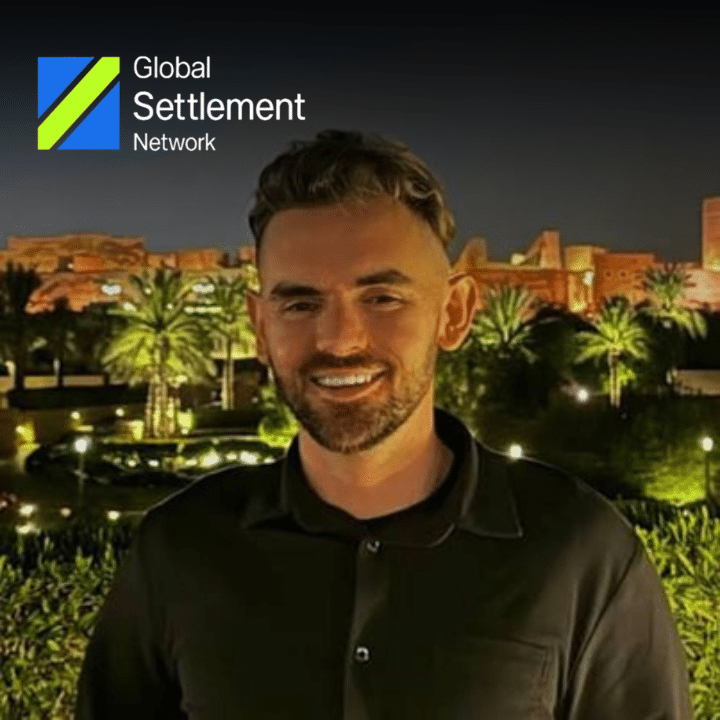
Ryan Kirkley co-founded Cryptan Labs before running Cointelegraph’s first venture fund as head of ventures, and now splits his time as chief executive and co-founder of Global Settlement Network (GSN) while also managing a $50 million fund at Singularity VC.
GSN pitches itself as regulated settlement infrastructure for institutions moving tokenised assets and stablecoins across borders, work it has tied to a Canton Network validator role alongside Goldman Sachs and Visa, and to a live infrastructure programme in Uganda with development partner Diacente Group.
Two figures attached to GSN’s public story needed direct questions before this interview could run: a $125 million ‘committed settlement liquidity’ figure announced alongside its pre-seed round, reported at the time as having zero active use while GSN’s market-making entity was still being formed, and a $5.5 billion valuation attached to its Uganda programme with no public breakdown of what the number actually measures. We put both to Kirkley directly, along with a direct question on where things actually stand with ADGM, where GSN has no announced licence or office despite pitching the UAE as central to its regional strategy.
The Interview
You co-founded Cryptan Labs, then ran Cointelegraph’s first venture fund as Head of Ventures, and now you’re running GSN while also managing a $50 million fund at Singularity VC. What does seeing infrastructure from the investor side teach you that you couldn’t learn just building it?
Ryan Kirkley: It teaches you humility, mostly.
When you are a founder you fall in love with the problem, and that is necessary, but it also gives you tunnel vision.
You spend eighteen hours a day inside one product and one thesis, and you start to believe the world is going to bend around it. Sitting on the other side of the table cures that fast. At Cointelegraph and now at Singularity I have seen hundreds of pitches from teams building blockchains for banks and real world assets.
Very few of them had thought seriously about who signs the contract, who has budget, the regulatory needs, how long the procurement cycle actually is inside a bank, and how to make all the different chains and solutions work with each other.
That pattern recognition is the real asset.
You learn to tell the difference between a beautiful piece of engineering and a company.
You learn that in financial infrastructure the hardest part is almost never the code; it is the distribution and the institutional fit.
A bank does not buy a blockchain. A bank buys a solution to a settlement, liquidity or compliance problem that its CFO and its regulator can both live with.
So at GSN we built the company backwards from that reality.
We started with the questions I would ask as an investor: where does the friction actually cost institutions money, who is the buyer, and does this get more valuable as tokenized markets grow or less?
Settlement, liquidity and interoperability were the answers, because those problems compound as more assets move on-chain.
I am probably harder on our own roadmap than any board member, and I think that is a direct result of having spent years saying no to good ideas that were not good businesses.
Also, read UAE Named Region’s Leading Example of Regulated Stablecoins in New Report
Your framing is that the real competition between financial hubs isn’t about attracting crypto exchanges anymore; it’s about attracting regulated settlement infrastructure. What’s the actual evidence for that viewpoint: a specific deal, or a specific regulatory signal?
Ryan Kirkley: Look at what the last two years of regulation actually covered. Stablecoins in the US, the UAE, Hong Kong and Singapore.
Tokenized deposits. Digital securities regimes. Custody rules. MiCA in Europe. Almost none of it is about exchanges; it is about the assets themselves and the institutions that hold them.
And once you regulate the assets, the next question every regulator asks is:
How do these things actually move?
How do they settle against cash, against each other and against the legacy system?
That is a settlement question, and it is where the conversation has moved.
The clearest signal for me is who is sitting across the table. Three years ago the people asking about digital assets were innovation teams and venture arms.
Today it is central bank payments departments, treasury officials and heads of market infrastructure at banks. Their questions are not “how do we attract crypto companies.”
They are “where does the liquidity sit, who controls the rails our institutions depend on, and how much of our settlement flow do we want routed through infrastructure in another jurisdiction.”
Those are sovereignty and market-structure questions, not marketing questions.
An exchange is a venue. It generates fees and headlines, and it can leave for a friendlier jurisdiction in a quarter.
Settlement infrastructure is plumbing. Once banks, asset managers, payment companies and a government are moving value through it, it becomes part of the financial system, and the jurisdiction that hosts it captures liquidity, data, talent and a seat at the table when global standards get written.
I would argue the hubs that understand this, Abu Dhabi and Singapore in particular, are already behaving accordingly, and the ones still chasing exchange listings are fighting the last war.
GSN doesn’t currently have an announced licence or office in ADGM. Is this genuine operational interest, something you’re actively evaluating?
Ryan Kirkley: It is genuine, and we are actively in process of making it happen, but I want to be precise about what that means because I have watched too many companies in this industry open an office for the press release and staff it with a plaque.
Our rule for entering a market is simple: there has to be institutional demand we can name, a regulator who understands the asset class, and a live use case for the infrastructure.
Abu Dhabi checks all three. ADGM has built one of the more sophisticated institutional digital-asset frameworks in the world, and critically, it is not just regulating tokens. It is thinking about custody, settlement, and how tokenized assets interact with banks and sovereign capital. That is exactly the layer GSN operates in.
What I will not do is get ahead of a formal announcement.
The right structure for GSN in the region, whether that is a licence, an entity, a partnership or some combination, is still being worked through with the licensing authority, and the sequencing matters.
But the Middle East is central to our international strategy, not a footnote, and Abu Dhabi is one of the markets we are taking most seriously. When we announce something there, it will be because there is a counterparty and a use case behind it, not because we wanted a dateline.
You’ve described the goal as giving countries alternatives to settlement systems routed through European banks or US correspondent banking networks. Concretely, what does a government or central bank actually have to build, or give up, to get that kind of settlement sovereignty?
Ryan Kirkley: First, let me kill a misconception.
Settlement sovereignty is not de-dollarisation.
For nearly every country I talk to, that would be economically self-destructive. The dollar and the euro are not going anywhere, and the goal is not to replace them.
The goal is control over the path. Today, if a Ugandan exporter sells gold to a buyer in Dubai, the payment might touch a correspondent bank in London, a dollar clearing account in New York and two or three intermediaries in between, each adding a day, a fee and a compliance review, before value lands in Kampala.
Neither party is in London or New York. Neither central bank has visibility into the transaction until it is done.
That is the dependency governments are trying to reduce: not access to the dollar, but the requirement that every transaction ride through someone else’s rails on someone else’s timetable.
What does a country have to build?
Less than people assume. You need regulated digital rails that domestic institutions can plug into, a clear legal framework for issuance and custody, credible liquidity so the rails are actually usable, and connectivity to international counterparties so you are adding options rather than building an island.
You do not rebuild your payment system. You do not abandon Swift or your correspondent relationships. You add a second path that settles faster and more directly, with your regulator watching every transaction in real time instead of reading about it afterwards.
What do you give up?
Honestly, very little, apart from the excuse.
The hard part for our solution is not technical; it is political will and institutional coordination between a central bank, a finance ministry and the commercial banks. Where that will exists, we have seen countries move from a conversation to a regulatory sandbox in months, not years.
Sovereignty in this context just means having a choice about how your economy connects to the world. Right now most of the Global South does not have one.
GSN announced $125 million in committed settlement liquidity alongside the pre-seed round, but reporting at the time quoted GSN saying that liquidity was at zero active use while the market maker entity was still being formed. What’s actually deployed today, and what’s still committed but unused?
Ryan Kirkley: I appreciate the question because this is exactly the kind of distinction that gets blurred in this industry, and I would rather over-explain it than have anyone read that number the wrong way.
When we announced $125 million alongside the pre-seed in May, we called it committed settlement liquidity, deliberately.
It was a commitment anchored by Ubuntu Group to backstop settlement on the network. It was never presented as capital already flowing through the network on day one, and when reporters asked at the time we told them plainly that active use was zero while the market-making entity and the operational controls were being established.
I do not think you can run institutional settlement infrastructure responsibly if you put liquidity to work before the risk framework, the counterparty onboarding and the operational plumbing are in place. Banks would rightly walk away from anyone who did.
There are three different numbers here and they should never be confused: committed liquidity, which is the capital pledged to the network; available liquidity, which is what is actually positioned and callable today; and settlement volume, which is what has moved through the rails.
Since May we have been converting the first into the second and building toward the third.
Your Uganda partnership with Diacente Group has been described as a $5.5 billion project. What does that figure actually refer to, committed capital, projected economic impact, total addressable infrastructure spend, and how much of it is GSN’s own balance sheet versus partner or government commitment?
Ryan Kirkley: The program brings together the Government of Uganda, Diacente as the development partner, domestic and international financial institutions, investors and technology providers. Each has a different role in how capital is raised, deployed and settled.
GSN’s role is the settlement and financial infrastructure layer: the rails through which that capital, the tokenized assets tied to real projects, and the associated cross-border flows can move transparently and settle with finality.
Think of us as the plumbing for a very large construction site, not the developer.
Why does that matter?
Because a program of that size, with international investors, local banks and a central bank all involved, is exactly where the friction I described earlier becomes expensive.
Money moving in tranches from multiple jurisdictions, land and mineral assets being tokenized, revenue flowing back to investors, all of it settling through legacy correspondent rails would cost time and trust at every step.
Our job is to take that out. We have been working through the Bank of Uganda’s regulatory process to do it properly, with local banking partners, and I would characterise our contribution as infrastructure and engineering rather than balance sheet.
Twelve months from now, what does GSN’s presence in the Middle East actually look like, a licence, a live corridor, a specific bank or government partner, or is that still an open question?
Ryan Kirkley: Twelve months from now I want something a bank treasurer in the region is actually using on a Tuesday afternoon.
That is my definition of success, and I care far more about it than about the label.
The region is impossible to ignore for what we are building.
You have regulators in Abu Dhabi and Dubai that have moved faster and with more sophistication than almost anyone, you have some of the deepest pools of sovereign and institutional capital in the world, and you have a genuine appetite to build new financial infrastructure rather than simply adopt whatever New York or London hands down.
Add to that the Gulf’s role as a hub between Africa, South Asia and Europe, which is exactly the set of corridors where settlement friction is highest and the economics of doing it better are strongest.
For a settlement network, that combination is about as close to ideal as it gets.
I am not going to manufacture a headline today about what we will announce in a year.
Whether it shows up first as a licence, a live corridor, a banking relationship or a government partnership will depend on the work that is under way now, and some of those conversations move at the pace of the institutions involved, not ours.
What I can tell you is that our interest is operational, not theoretical, and that the objective is for GSN to have a real role in how institutional capital and tokenized assets move through the Gulf and out to the rest of the world.
If in twelve months we have a plaque on a wall and nothing moving through the network, I will consider that a failure regardless of how good the press release looks.

Editor’s Take: The ADGM answer is the most honest part of the interview, because of what it declines to promise. Most founders in this position inflate ‘actively in process’ into something closer to imminent. Kirkley didn’t, and set a concrete, checkable bar for himself twelve months out, a bank treasurer actually using the infrastructure, rather than a press release.