

Table of Contents
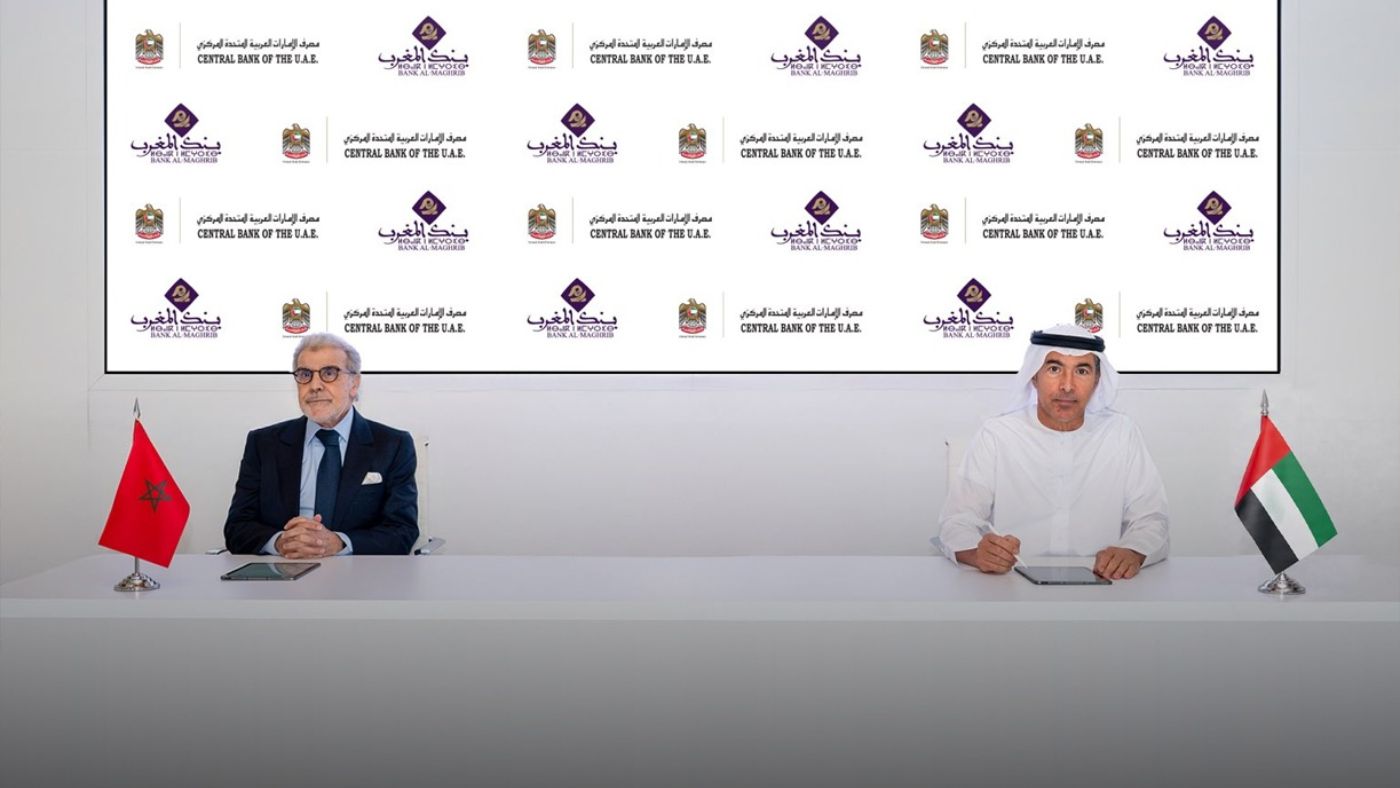
The Central Bank of the UAE (CBUAE) and Morocco’s central bank, Bank Al-Maghrib, signed two memorandums of understanding on 3 October 2026 at the CBUAE’s headquarters in Abu Dhabi. H.E. Khaled Mohamed Balama, CBUAE governor, and Abdellatif Jouahri, governor of Bank Al-Maghrib, signed them.
Key Takeaways
The Central Bank of the UAE (CBUAE) and Morocco’s Bank Al-Maghrib signed two MoUs on 3 October 2026: one on banking supervision and Islamic finance, one on payment systems, cards and digital currencies.
The payment MoU is about exploring links between the two countries’ instant payment platforms, national card switches and messaging systems, mutual acceptance of domestic cards, and exchange of central bank digital currency (CBDC) expertise. It doesn’t launch a link.
It follows the CBUAE’s payment-link agreements with India (2023 and 2024) and the Philippines (April 2026). The Philippines link isn’t reported as live, and a 4 October report still describes the India link as in progress.
The two MoUs
The first covers banking supervision and Islamic finance: regulatory coordination, supervisory information exchange, alignment of supervisory practice, strengthening Shariah governance for Islamic banking, and cross-border Shariah-compliant financing, including trade finance and infrastructure investment.
The second covers payments and digital currency. It sets out to explore interlinking the two countries’ instant payment platforms, national card switches and financial messaging systems, so cross-border transactions can be processed and settled and each country’s domestic payment cards can be accepted in the other. It also covers exchanging expertise on retail and wholesale CBDCs, exploring their use in cross-border payments, and cooperating on fintech and on regulatory frameworks for virtual assets, including crypto-assets and stablecoins, with consumer protection.
Also, read UAE and Syria Central Banks Sign Payments and Fintech MoU
H.E. Khaled Mohamed Balama said,
“The MoUs show a commitment to expanding financial and banking cooperation with the brotherly Kingdom of Morocco.”
The CBUAE described the goal as stronger cooperation and more efficient cross-border financial transactions between the two countries, according to Salaam Gateway. The agreements frame intentions to explore, develop and coordinate. They don’t establish a payment link or launch a joint CBDC.
Where the UAE’s central bank payment links stand
| Counterparty | Agreement | What it covers | Status in reporting |
|---|---|---|---|
| India | MoUs on interlinking payment and messaging systems and local-currency settlement, July 2023 and February 2024 | Linking India’s UPI with the UAE’s Aani instant payment platform; RuPay and Jaywan card interlinking | A 4 October 2026 report says UPI is “being linked” with Aani and integration between RuPay and the UAE’s card network, UAESWITCH, is being explored |
| Philippines | MoU, 15 April 2026 | Integration of instant payment platforms; future option to interlink card switches and messaging systems; CBDC, open finance, digital assets, Islamic banking | No live link specified in the reporting |
| Morocco | Two MoUs, 3 October 2026 | Exploring links between instant payment platforms, card switches and messaging systems; mutual card acceptance; CBDC expertise; virtual-asset frameworks | Exploratory; no link announced |
What’s next
Neither central bank has named the Moroccan payment platform or scheme that would connect to the UAE’s, or given a timeline. The India agreement was first signed in 2023 and its card and payment links are still described as in progress in October 2026, which gives a sense of how long the step from an MoU to a working link can take. Which of the three agreements produces the first live link is worth watching.
FAQs
What does interlinking instant payment systems mean?
Connecting two countries’ real-time payment platforms so a payment sent from one can arrive in the other within seconds, without routing through card networks or correspondent banks. The UAE’s instant payment platform is Aani.
Does the UAE-Morocco MoU launch a payment link?
No. It sets out to explore linking the countries’ instant payment platforms, card switches and messaging systems. No link, launch date or technical specification has been announced.
What is a national card switch?
The domestic network that routes card transactions between banks and merchants within a country. Linking two countries’ card switches allows each country’s domestic cards to be accepted in the other.
Which countries has the UAE central bank agreed payment links with?
India (2023 and 2024), the Philippines (April 2026) and now Morocco (October 2026). Each is an agreement to link systems. The Philippines link isn’t reported as live, and a 4 October report still describes the India link as in progress.

Editor’s Take: The CBUAE announced three bilateral central-bank agreements in a week: the Egypt currency swap renewal on 29 September, the Syria MoU on 2 October and these two MoUs on 3 October. The Morocco payments MoU is the most specific of the three: it names three layers to link (instant payment platforms, card switches, messaging systems) plus mutual card acceptance. The weakest part is the timeline. India agreed to link UPI and Aani in 2023 and the card side is still being explored in October 2026, so a first-step MoU with Morocco is early. What the agreement doesn’t say is which Moroccan platform would connect, or when.