
Table of Contents
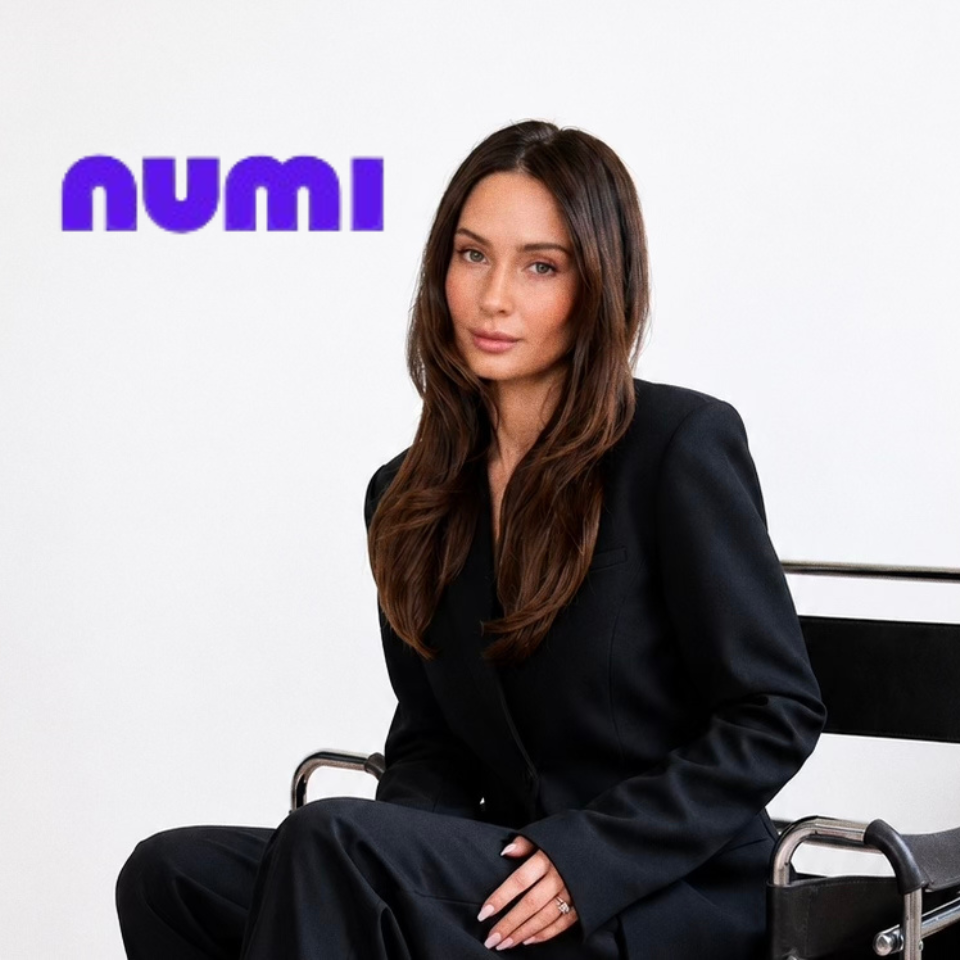
Most founders building for the Gulf start with a Western product and a translation budget. Leni Andronicos started somewhere else entirely. After six years building startups in Sweden, the Numi co-founder and CEO made a deliberate bet: that the GCC, not Europe, was where an AI-native financial agent should be born.
That bet is playing out inside the UAE’s Al Tareq Open Finance framework, where Numi has secured access to the regulatory sandbox from the Central Bank of the UAE, as it works toward a Third-Party Provider licence, one of the clearest signals yet that the region’s regulators are choosing to build the rules of AI-native finance alongside the companies shaping them, rather than at arm’s length. It’s a sharp contrast to the more cautious posture AI is meeting elsewhere, and Andronicos has been explicit that it’s part of why she chose Dubai over almost anywhere else.
We caught up with Andronicos on what Western fintech gets wrong about GCC money habits, what it actually took to build a Decision Engine around remittance cycles and Ramadan spending rather than retrofit one, and her advice for founders trying to move fast in a region that’s rewriting its own rulebook in real time.
You moved from Sweden to Dubai to launch Numi. What specific gaps did you observe within the GCC’s personal finance landscape that convinced you this region, rather than Europe, was the absolute right place to pioneer an AI-native financial agent?
Leni Andronicos: Europe’s a mature market and a very cautious one. When it comes to AI specifically, the regulators there are still moving pretty slowly and carefully, and I get why, but it means you’re stuck waiting for permission instead of just shipping a great product. The UAE’s just doing something completely different. The regulators here aren’t waiting for AI to prove itself elsewhere first; they’re literally building AI rules right now, in collaboration with companies like ours.
They’re holding the door open instead of guarding it. So I didn’t want to go fight for scraps in a market that’s still figuring out if it even wants to let AI in. I wanted to build somewhere where the door was already open.
Most personal finance apps in the market are Western models ported over to the Gulf, often failing to account for regional financial realities. What are the unique financial habits, multi-currency needs, or remittance and saving nuances specific to GCC consumers that Numi’s Decision Engine was built to solve?
Leni Andronicos: A budgeting app built in San Francisco has no idea what a gratuity payout does to your finances, or how getting your visa renewed changes how careful you need to be with money for a few months, or how much your spending changes during Ramadan. Here, that’s not some weird edge case; that’s just how most people’s money actually works. So we didn’t take some American app and slap a translation on it. We built our whole engine around that stuff from day one.
Numi recently secured technical access to the Al Tareq Open Finance trust framework as you move toward a Third-Party Provider (TPP) licence. How has collaborating within this specific regulatory framework influenced how you are training your AI agents to interact with local banks?
Leni Andronicos: It’s made us way more careful in a good way. When you’re plugged into a real framework like this, you can’t just say “the AI decided” and leave it at that. Every single move it makes has to trace back to something the user actually told it to do, and it has to make sense if someone asks why. That’s pushed us to be more precise. And because we’ve been building alongside this framework the whole time, compliance isn’t something we bolted on at the end; it’s just baked into how the agents work from the start.
The GCC has a highly sophisticated private banking sector, but those concierge services are traditionally reserved for the ultra-wealthy. How does Numi use automated execution to bring that high-touch, ‘done-for-you’ asset optimisation to the broader mass-affluent and retail segment across the Emirates?
Leni Andronicos: Private banking was never expensive because the advice was hard to figure out. It is expensive because you are paying a human to actually do it for you. So if you take that human part out, the whole cost structure changes. Stuff that used to need a relationship manager and a huge minimum balance can now just happen in the background, continuously, for pretty much anyone. So we’re not really giving people better advice, advice was never really the hard part. We’re giving people the execution, and that’s the bit that used to only be available if you had money.
As an entrepreneur building on the ground in Dubai, what is the most critical piece of advice you can give to other founders trying to navigate the Middle East’s regulatory and funding ecosystem right now?
Leni Andronicos: Go build a relationship with the regulator before you actually need anything from them. So many founders only show up once they’re desperate for a licence or an approval, and by then you’re just playing catch-up. If you show up early and just genuinely ask, ” Hey, how do we do this the right way, not how do we sneak around it, you end up moving faster in the long run, not slower. Especially in a region moving this quickly, being the founder the regulator already trusts is worth more than any growth hack.
Funding here works the same way. This region rewards founders who build real relationships. I’ve had some of my best investor conversations happen months before I actually needed the money, just meeting people, being straightforward about what we were building and why. By the time you’re actually raising, you want investors who’ve already been watching you for a while, not ones you’re meeting cold. The capital is absolutely here, and it’s moving fast, but it follows trust. So my advice is basically the same both ways: show up early, be genuine about what you’re building, and let the relationship do the work before you ever need to ask for anything.

Editor’s take: The regulator line is the one worth sitting with. Andronicos didn’t lead with product or funding when asked for founder advice; she led with ‘build a relationship with the regulator before you need anything from them.’ That’s not the standard Silicon Valley playbook, and it’s a fair signal of how differently building in the GCC actually works compared to how founders coming from Europe or the US assume it works.